New year goals planner 2027: how to set goals you will actually keep
Many new year goals fade by February, not because people lack willpower, but because the goal was too big, too vague, or never made it onto an actual day. A simple goals planner for 2027 fixes that by connecting three levels: the few things you want this year, the steps for each month, and what you will do today. This guide shows you how to set up that system on paper, with examples for money, home and work goals.
General information only. This guide is about planning and habits. It is not medical, psychological or financial advice, and no particular result is promised.
Step 1: Look back before you look forward
Take twenty minutes in late December or early January and answer four questions about 2026: What went well? What did I keep putting off? What drained my time or money? What do I want more of? Write short answers. This stops you setting goals you already know do not fit your life, and it often shows the one change that would make the biggest difference.
Step 2: Choose no more than three goals
A long list of resolutions spreads your time and energy too thin. Choose up to three goals for 2027, ideally from different areas, for example:
- Money: build a starter emergency fund, clear one card, or pay for Christmas 2027 without borrowing.
- Home: cook at home four nights a week, or clear one room.
- Work or study: finish a course, update your CV, or launch a side project.
Write each goal as an outcome you could check at the end of the year: "Save £500 in a separate account by 31 December 2027" is easier to plan than "be better with money".
Step 3: Break each goal into monthly steps
Take a sheet with twelve boxes and, for each goal, write one small step per month. For a savings goal that might be: January, open a separate account and set up a standing order; February, cancel one unused subscription and move the amount across; March, review the total. For a home goal: January, plan one week of meals; February, batch-cook once a week; and so on.
Keep the steps small enough that a bad week does not break them. You can always do more.
Step 4: Plan each day with three priorities
This is where most goal plans fail: the monthly step never reaches a specific day. Each morning, or the evening before, write down your three priorities for the day. At least one should move a goal forward, even if it only takes ten minutes. Everything else goes on a short "if there is time" list.
An undated daily planner works well here because you only fill in the days you use. Missing a day does not leave a page of empty boxes staring back at you, which can make it easier to give up on a dated diary.
Step 5: Review once a week
Pick a regular slot, such as Sunday evening, for a ten-minute review. Look at the week's pages and ask: Which goal moved? What got in the way? What is the one step for next week? Tick off the monthly step if it is done. If a goal keeps stalling, make the next step smaller rather than giving up on it.
Step 6: Track progress you can see
Visible progress keeps motivation up. Colour a box for each week you save, each meal you cook at home, or each chapter of a course you finish. Our debt snowball tracker guide uses the same idea for paying off debt.
Money goals: start with the budget
If one of your goals is about money, set up your budget first, because every money goal depends on knowing what is left after bills. Our new year budget reset guide walks through a zero-based budget in six steps, and the 2027 budget planner guide shows how to map yearly costs on a money calendar so they do not derail your plan in the middle of the year.
Common reasons goals stall, and simple fixes
- Too many goals: pause all but one until it becomes a habit.
- No time on the calendar: book the first step like an appointment.
- All-or-nothing thinking: a ten-minute version counts.
- Forgetting why: write the reason for each goal at the top of your planner.
- No review: without the weekly check-in, goals drift quietly.
A sample week
Illustration only. Goal: save £500 in 2027. Monday's priorities: send a work report, book a dentist appointment, and move £10 to savings. Wednesday: cancel one unused subscription. Sunday review: two steps done, next week check the energy tariff. Small actions like these add up over twelve months.
Planners that can help
All Fernbrook printables are original layouts. Created with AI assistance.
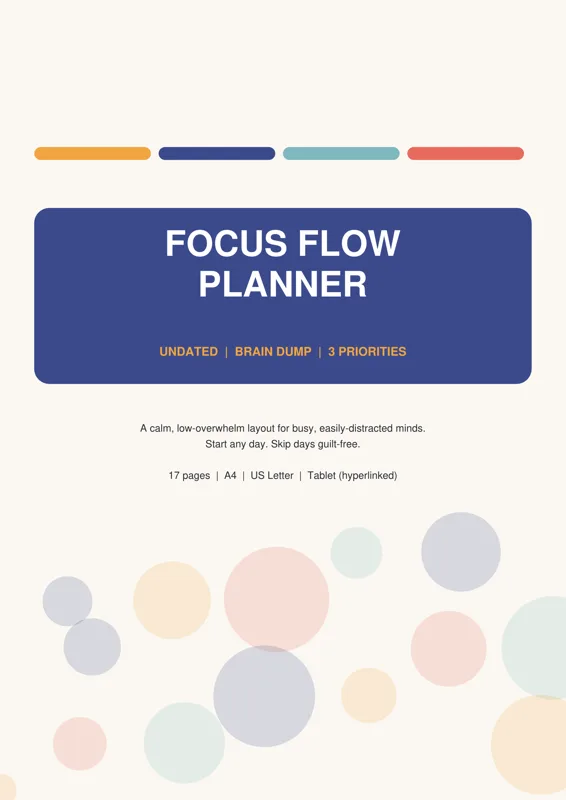
- Focus Flow Daily Planner (€6.99): a simple, low-clutter undated daily planner with three priorities a day.
- Paycheck Budget Reset (€9): a zero-based budget workbook for money goals, with an income map and a bill calendar.
- New Year Money Reset Bundle (€20.99): budget, debt and meal planning printables for a fresh start in January.
FAQ
How do I set new year goals I will keep?
Choose up to three specific goals, break each into one small step per month, put at least one goal step into each day as a priority, and review progress every week.
How many new year resolutions should I make?
Fewer is usually better. One to three clear goals are easier to plan and keep than a long list.
Is an undated planner better than a dated diary?
For many people, yes: you only fill in the days you use, so a missed day does not leave blank pages, which makes it easier to restart.
Is this professional advice?
No. It is general planning information only, not medical, psychological or financial advice.
Written with AI assistance. General information only, not financial, tax, legal, medical or educational advice; no particular outcome is promised. Price includes VAT where applicable (collected by Lemon Squeezy, our merchant of record).