January meal plan to save money: a simple plan for UK families
A January meal plan to save money is one of the simplest ways to ease the long wait for January pay day. Food is one of the few big costs you can change week by week, and after Christmas most kitchens are full of leftovers, half-used jars and freezer bags. This guide shows UK families how to plan a month of cheaper meals: what to use up first, how to set a food budget, how to plan seven dinners that share ingredients, and how to keep track. Our free budget meal plan page lets you plan your first week on one A4 sheet.
Not financial or dietary advice. This is general information to help you plan. It does not promise a particular saving, and it is not medical or nutrition advice; check with a doctor or registered dietitian for specific dietary needs or allergies.
Step 1: Do a post-Christmas kitchen check
Before you plan anything, look in the fridge, freezer and cupboards. Write down what needs using first (dates soonest) and what you have plenty of: rice, pasta, tins, frozen vegetables, cheese, cooked meat in the freezer, leftover vegetables. Your first week of meals should be built around these. Food you already have is already paid for, so using it first can make the week's shop smaller.
Step 2: Set a weekly food budget
Look back at what you spent on food in a normal month, not December, and divide by four or five weeks. Then decide on a weekly figure that is realistic for your household. Include everything: the main shop, top-up trips, packed lunches, snacks and takeaways. Writing the number at the top of the plan matters, because each meal can then be checked against it.
If January is very tight, our new year budget reset helps you see how much is really available once bills are covered.
Step 3: Plan seven dinners that share ingredients
Ingredients that appear in two or three meals can mean less waste and a shorter shopping list. A simple pattern for the week:
- Two "use it up" nights: soup, frittata, fried rice or pasta bake with whatever needs eating.
- One batch-cook: a big pot of chilli, stew, curry or bolognese, with half frozen for later in the month.
- One planned leftovers night: the batch-cook again, perhaps as a jacket potato filling or wraps.
- Two simple store-cupboard meals: beans on toast with eggs, a lentil dhal, pasta with a tomato sauce.
- One family favourite so the plan feels normal rather than strict.
Write each meal next to its day, then list the ingredients you still need to buy. The free budget meal plan page has columns for the main meal, ingredients to buy, "have already?" and an estimated cost, with a weekly total at the bottom.
Step 4: Shop from one list
- Check the unit price. UK shelf labels usually show the price per kilo, litre or item, which makes it easier to compare pack sizes and own-brand ranges.
- Try a cheaper range for staples such as tinned tomatoes, pasta, rice and frozen vegetables, and keep the brands that matter to your family.
- Buy frozen and tinned fruit and vegetables for later in the week; they keep longer and can help cut waste.
- Watch reduced items only if they fit a meal on your plan or can be frozen the same day.
- Limit top-up trips. Every extra trip tends to add items that are not on the list.
Step 5: Batch, freeze and label
An hour of prep at the weekend can save money on busy evenings, when takeaways are most tempting. Cook the batch meal, portion it, and label each container with what it is and the date. Keep a simple freezer list so nothing gets lost at the back. Follow the packaging and your local food safety guidance for storage times.
Step 6: Plan lunches and snacks too
Lunches bought out add up quickly. Planning a few packed lunches from dinner leftovers, soup in a flask, or sandwiches made from the main shop keeps them inside the same budget. A small, planned snack box for children can also stop extra shop visits.
Step 7: Track what you actually spend
Write down every food spend for four weeks, including top-ups and takeaways. At the end of each week compare it with your budget. If you are over, look at which trips or items caused it and adjust next week's plan. If you are under, move the difference to a bill, a debt payment or a 2027 sinking fund.
A sample week
Illustration only, not a recommendation; prices vary by shop and area. A family of four might set £85 for the week. Monday: soup with leftover vegetables and bread. Tuesday: pasta bake with leftover ham. Wednesday: big pot of chilli. Thursday: chilli jacket potatoes. Friday: homemade pizza on wraps. Saturday: lentil dhal with rice. Sunday: a simple roast chicken, with the leftovers going into Monday's wraps. Shared ingredients (onions, tins of tomatoes, rice, wraps) keep the list short.
Keep February in mind
If the plan works, keep it. A weekly meal plan can become a regular habit that is easy to keep going. Planning seasonal costs early helps too: our guide to Christmas on a budget in the UK covers food shopping for next December.
Planners that can help
All Fernbrook printables are original layouts, with no recipes included. Created with AI assistance.
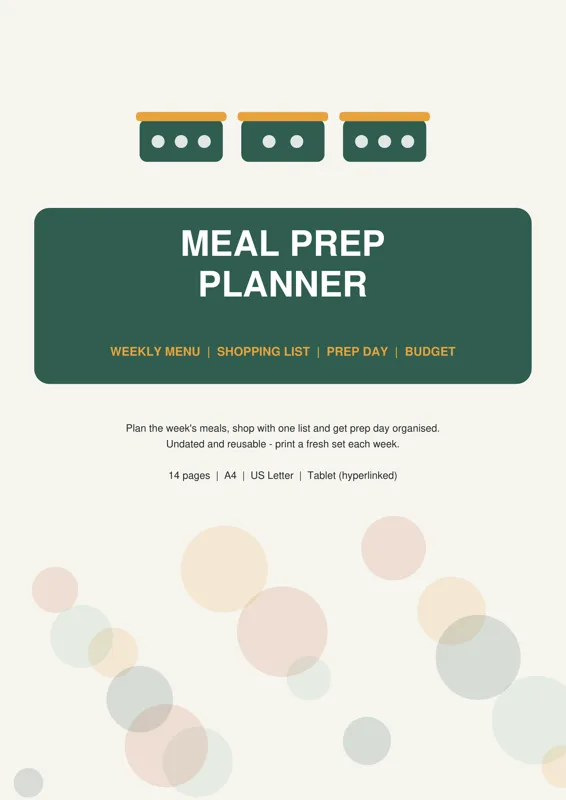
- Weekly Meal Prep Planner (€5.49): weekly menu, grouped shopping list, pantry check, prep day pages, a budget meal plan and a 4-week food spending tracker.
- Weekly Meal Planning System (€9): a guide to planning meals for the week with grocery lists.
- New Year Money Reset Bundle (€20.99): the meal planning guide with our budget and debt printables.
- Calm Home Bundle (€19): three home guides, including meal planning and budgeting.
FAQ
How can I save money on food in January?
Use up what you already have first, set a weekly food budget, plan seven dinners that share ingredients, shop from one list and track what you spend.
What is a good January meal plan on a budget?
A mix of use-it-up meals, one batch-cook with planned leftovers, simple store-cupboard meals and one family favourite, all built around a weekly food budget.
How much should a family spend on food per week?
It depends on your household, area and needs. Start from what you spent in a normal month and set a realistic weekly figure you can track.
Is this dietary or financial advice?
No. It is general planning information only. For dietary needs speak to a doctor or registered dietitian; for money worries contact a free service such as MoneyHelper.
Written with AI assistance. General information only, not financial, tax, legal or travel advice; no particular outcome is promised. Price includes VAT where applicable (collected by Lemon Squeezy, our merchant of record).