Christmas on a budget UK: a practical plan for a calmer Christmas
Planning Christmas on a budget in the UK starts with one honest number: what you can spend without borrowing or falling behind on bills. Prices for food, energy and gifts all add up in December, and many people are paid earlier than usual before Christmas, which stretches the wait until January payday. This guide gives you a simple plan, plenty of frugal Christmas ideas for UK households, and ways to make it work whether you are paid monthly or weekly.
Step 1: Write down your Christmas budget
Start with the money you actually have: savings already set aside for Christmas, plus whatever is genuinely spare from your remaining pay packets once rent or mortgage, Council Tax, energy, food, transport and debt repayments are covered. That total is your Christmas budget. Write it down before you look at a single gift.
Then split it into categories. A typical split might include:
- gifts
- food and drink, including Christmas Day and the days around it
- cards, wrapping and postage
- travel to see family
- outings, parties and work events
- a small buffer for surprises
Our Christmas gift budget planner guide goes through the gifts part in detail, including setting a budget for each person.
Step 2: Plan around your pay dates
A Christmas budget planner for the UK needs to reflect when money actually arrives. Mark your pay dates for November, December and January on a calendar. If your December pay comes early, remember it has to stretch further: keep enough aside for January bills before spending on Christmas.
How to afford Christmas on weekly pay
If you are paid weekly or fortnightly, divide your Christmas budget by the number of pay days left and treat it as one more bill each week. Our guide to budgeting when you are paid weekly shows how to split monthly bills across pay weeks, and the Weekly-Paid Budget Planner (UK) has pages built for this. To work out a weekly savings amount, see how to save for Christmas weekly.
Step 3: Frugal Christmas ideas for UK households
Cutting costs does not have to mean cutting the parts people enjoy. Ideas that many families use:
- Secret Santa for adults. One gift each, with an agreed spending limit, instead of everyone buying for everyone.
- Children-only presents. Adults agree to skip gifts for each other.
- Shared hosting. Each household brings a dish instead of one person paying for the whole meal.
- Plan the food shop. Write a menu for the main days and shop from a list. Our Weekly Meal Planning System can help with menus and shopping lists.
- Use what you have. Check cupboards, the freezer and last year's decorations and wrapping before buying more.
- Free local events. Many towns have light switch-ons, carol services and markets that cost nothing to attend.
- Homemade or time-based gifts. Baking, a framed photo, or an offer of babysitting can mean more than a bought gift.
- E-cards or fewer cards. Postage adds up; consider cards only for people you will not see.
Step 4: Track what you spend
A budget only helps if you can see where you are. Keep a running total for each category, and write down every purchase, including small ones. If one category goes over, take the difference from another straight away. A printed planner on the fridge, or a note on your phone, both work; what matters is that you check it before buying.
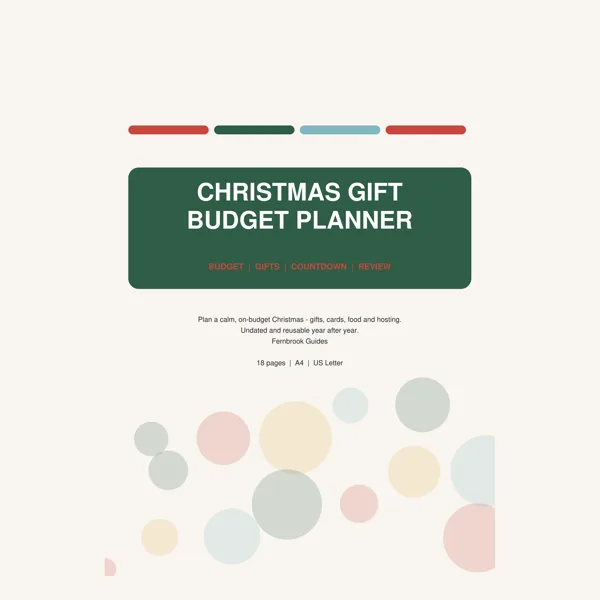
The Christmas Gift Budget Planner has a budget-by-category page, gift lists with budget and actual cost, a food and hosting budget and a December countdown. You can try the free 4-page sample first: it is a direct download, with no email needed.
Step 5: Be careful with credit and pay-later offers
Buy now, pay later and store cards spread the cost, but they are borrowing. Missed payments can bring fees and affect your credit record, and January repayments arrive just as the long wait for payday ends. Where you can, save ahead instead. If debt is worrying you, free and impartial help is available: in the UK from MoneyHelper, StepChange or National Debtline; in Ireland from MABS; in Portugal from the DECO consumer association. No endorsement is implied.
Step 6: Protect January
Before you spend the last of your Christmas money, check January: rent or mortgage, bills, travel to work and food until payday. Some people keep a small "January buffer" as its own line in the Christmas budget. When January comes, a short new year budget reset helps you get back on track.
A simple example
Illustration only, not a recommendation. Suppose a household has £400 for Christmas. It might split this as £200 for gifts, £100 for food and drink, £30 for cards and wrapping, £40 for travel and £30 as a buffer. If gifts start running over, the buffer is the first place to look, then travel or cards. Your own split will depend on your family and priorities.
Printables that can help
- Christmas Gift Budget Planner (€5.99): gift lists, budget by category and a December countdown.
- Christmas Savings Planner (€4.99): savings trackers for the weeks before Christmas.
- Weekly-Paid Budget Planner (UK) (€6.99): budgeting around weekly pay.
- Christmas Planning Bundle (€13.99; bought separately €21.96): gift budget, savings, holiday trip and packing printables in one download.
FAQ
How can I do Christmas on a budget in the UK?
Set a total you can afford without borrowing, split it into categories such as gifts, food and travel, plan around your pay dates, and track spending as you go.
How do I afford Christmas on weekly pay?
Divide your Christmas budget by the number of pay days left and set that amount aside each week as if it were a bill.
What are some frugal Christmas ideas?
Secret Santa for adults, children-only presents, shared hosting, a planned food shop, reusing decorations and wrapping, and free local events.
Where can I get free help with debt in the UK?
MoneyHelper, StepChange and National Debtline offer free, impartial help. No endorsement is implied.
Written with AI assistance. General information only, not financial, tax, legal or travel advice; no particular outcome is promised. Price includes VAT where applicable (collected by Lemon Squeezy, our merchant of record).