How much to spend on Christmas presents: a simple UK budget method
"How much should I spend on Christmas presents?" comes up every autumn, and there is no single right number. What matters is that the figure comes from your own budget, not from adverts, social media or what you spent last year on a credit card. This guide gives you a simple method to set a Christmas present budget you can actually afford, split it fairly between the people on your list, and keep track of it until the last gift is wrapped. You can follow along with our free Christmas gift budget sample (4 A4 pages, no email needed).
Not financial advice. This guide is general information to help you organise your own money. It is not personal financial advice and no particular result is promised.
Why "average spend" figures are not your budget
Every year surveys publish an "average" amount people expect to spend on Christmas. These figures can be interesting, but they mix very different households together, and they say nothing about your income, your bills or your other goals. A better starting point is a simple question: how much money will you have between now and Christmas once your essentials are paid?
Step 1: Work out what you can afford
Look at your next two or three pay days. For each one, take your take-home pay and subtract your fixed bills (rent or mortgage, Council Tax, energy, phone, insurance, transport, childcare and debt repayments) and a realistic amount for food and everyday spending. What is left is the most you could put towards Christmas in total, and it is usually less than people expect.
Then decide how much of that leftover money should go to Christmas, and how much should stay as a buffer for January, which is a long month for many families. A Christmas that is paid for by the end of December is usually calmer than one that is still being paid off in March.
Step 2: Split the total into categories
Presents are only part of the cost of Christmas. Before you set a gift budget, give a share of the total to the other things that will come up:
- Food and drink: the main meal, extra treats and visitors.
- Travel: fuel, trains or parking to see family.
- Cards, wrapping and postage.
- Events: school fairs, work parties, nativity costumes, days out.
- Presents: what is left after the above.
Illustration only. If a household can afford £400 in total, it might give £120 to food, £40 to travel, £30 to cards and wrapping, £30 to events and £180 to presents. Your own split will be different.
Step 3: Write your gift list before you shop
List every person you plan to buy for: partner, children, parents, siblings, friends, teachers, colleagues and the Secret Santa at work. Seeing the full list on paper often explains why Christmas costs more than expected. Next to each name, add a budget figure. Some people use tiers to keep it simple:
- Tier 1: partner and children.
- Tier 2: close family.
- Tier 3: friends, wider family and small thank-you gifts.
Add up the column. If the total is higher than your present budget from step 2, change the list now, not at the till: reduce some amounts, move some people to a card or homemade gift, or agree a family Secret Santa.
Step 4: Agree limits with family and friends
Many families quietly agree a spending limit, a "children only" rule or a Secret Santa with one gift each. It can feel awkward to suggest, but it is often a relief for everyone. Raise it early, in October or November, and keep it simple: "Shall we do a £15 limit this year?" works better than a long explanation.
Step 5: Track budget against actual
For each gift, write what you planned to spend and what you actually paid, including postage. A budget only works if you notice when you go over. If one gift costs more, take it from another line rather than adding to the total. The Christmas gift budget sample has budget and actual columns for exactly this.
Step 6: Spread the cost if you have time
If you are reading this in October or early November, you may still have four to eight pay days before Christmas. Divide your total by the number of pay days left and set that amount aside each time you are paid. Our guide on how to save for Christmas weekly walks through it, and the free sinking funds tracker works for Christmas savings too.
Ideas that keep costs down
- Buy early and slowly so you can compare prices instead of panic buying in the last week.
- Set a postage date so you are not paying for express delivery.
- Give experiences or time: a day out, a cooked meal, babysitting.
- Use one gift for several people in a household.
- Keep receipts and a list of who has what, so nothing is bought twice.
What if you have already overspent?
It happens. Stop, add up what you have spent so far, and compare it with your total. If you have gone over, pause new purchases and look at which lines can still shrink. Avoid borrowing for presents if you can. In January, our new year budget reset guide helps you get back on track, and the Christmas on a budget guide covers the rest of the season. If debt is already worrying you, free and impartial help is available from services such as MoneyHelper, StepChange or National Debtline (named for information only; no connection or endorsement).
Printables that can help
All Fernbrook printables are original layouts. Created with AI assistance.
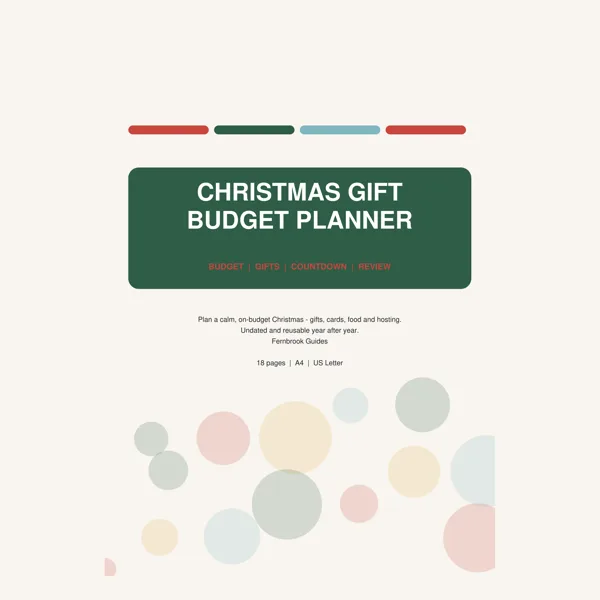
- Christmas Gift Budget Planner (€5.99): a whole-Christmas budget by category, a gift list with budget and actual columns, and a December countdown.
- Christmas Savings Planner (€4.99): weekly savings trackers to spread the cost before Christmas.
- Christmas Planning Bundle (€13.99): Christmas and holiday planners together in one download.
Not ready to buy? Print the free Christmas gift budget sample first.
FAQ
How much should I spend on Christmas presents?
An amount that comes from your own budget: work out what is left after bills and essentials before Christmas, take out food, travel and other costs, and split what remains between the people on your list.
How do I set a Christmas gift budget per person?
List everyone you buy for, group them into tiers, give each a figure and check that the total fits your present budget before you start shopping.
How can I spend less on Christmas presents?
Agree limits or a Secret Santa early, buy slowly and compare prices, give experiences or time, and track budget against actual for every gift.
Is this financial advice?
No. It is general information only. For personal help with money, contact a free, impartial service such as MoneyHelper.
Written with AI assistance. General information only, not financial, tax, legal, medical or educational advice; no particular outcome is promised. Price includes VAT where applicable (collected by Lemon Squeezy, our merchant of record).